
How Much Does Pool Landscaping Cost in Columbus, Ohio?
A swimming pool may be the centerpiece of a backyard, but the landscape surrounding it is what transforms the area into a complete outdoor living environment.
If you're planning a new pool or renovating an existing pool area in Central Ohio, one of the biggest questions is:
How much does pool landscaping cost?
The answer depends on what you want the space around your pool to become.
A project focused on new plantings and a refreshed pool surround requires a very different investment than a complete backyard transformation incorporating a custom patio, retaining walls, outdoor kitchen, pavilion, fire feature, lighting and extensive landscaping.
That's why it's important to think beyond the pool itself.
You're not simply landscaping around a swimming pool.
You're designing the environment where people will gather, entertain, dine, relax and spend their summers.
What Is Included in Pool Landscaping?
Pool landscaping can mean different things depending on the property and scope of the project.
For a complete outdoor living environment, it may include:
Pool patios and hardscaping
Paver or natural stone surfaces
Retaining walls
Grading
Seat walls
Steps and walkways
Outdoor kitchens
Pavilions and pergolas
Fireplaces and fire pits
Entertainment areas
Landscape lighting
Privacy landscaping
Trees, shrubs and planting beds
Drainage
Outdoor dining spaces
Each additional element affects the overall investment.
More importantly, those elements need to work together.
What Determines the Cost of Pool Landscaping?
There isn't one standard price for landscaping around a pool.
The overall investment is influenced by the size of the property, existing site conditions, materials, project complexity and the features incorporated into the design.
Here are some of the biggest factors.
1. Are You Building Around a New or Existing Pool?

This is one of the first questions to consider.
New Pool
When the pool and surrounding landscape are being developed together, there is an opportunity to think about the entire backyard before construction is complete.
The landscape design can account for:
Pool placement
Patio layout
Elevations
Planting areas
Drainage
Outdoor structures
Kitchen locations
Entertainment spaces
Walkways
Privacy
Lighting
This allows the pool to become part of a larger outdoor living plan.

Existing Pool
If the pool is already installed, the design needs to respond to existing conditions.
That could involve replacing outdated hardscaping, redesigning planting beds, improving privacy, correcting drainage issues or adding features such as a pavilion, kitchen or fire feature.
Both scenarios can create beautiful results. They simply require different approaches.
2. Pool Patio and Hardscape Size
The hardscape surrounding a pool can represent a substantial portion of the overall landscape.
A larger pool deck naturally requires more materials, excavation, base preparation and installation.
But square footage isn't the only consideration.
The design may also include:
Multiple entertaining areas
Dining spaces
Lounge areas
Steps
Borders
Curves
Seat walls
Multiple elevations
Walkways connecting the pool to the home
The more complex the hardscape becomes, the more planning and construction are required.
3. Pavers, Natural Stone or Other Materials
Material selection has a major impact on both the appearance and investment of a pool environment.
Depending on the design, homeowners may consider concrete pavers, natural stone or other hardscape materials.
Each offers different characteristics in terms of appearance, texture, maintenance and installation.
Around a pool, material selection also needs to consider practical factors such as:
Surface temperature
Traction
Drainage
Durability
Maintenance
Compatibility with the home's architecture
The goal isn't simply choosing a beautiful material.
It's selecting the material that makes sense for the complete environment.
4. Site Preparation, Grading and Drainage

A pool project can significantly change how water moves across a property.
Excavation, new hardscape surfaces and changes in elevation all need to be considered when developing the surrounding landscape.
Depending on the property, the project may require:
Grading
Drainage systems
Retaining walls
Excavation
Soil modification
Additional base preparation
These components may not be the most visually exciting parts of the finished project.
But they're critical.
Water needs to move away from structures and outdoor living areas appropriately, and the landscape needs to respond to the elevations created by the pool.
5. Retaining Walls

Pools and sloped properties often create interesting design challenges.
If the property has significant elevation changes, retaining walls may be needed to create level, usable outdoor areas and manage grade transitions.
Those walls can also become part of the aesthetic.
A retaining wall can:
Define the pool environment
Create planting areas
Provide additional seating
Connect multiple elevations
Frame views
Separate outdoor rooms
Height, length, material, drainage, excavation and structural requirements can all affect the investment.
6. Outdoor Kitchens

For homeowners who regularly entertain around the pool, an outdoor kitchen can completely change how the space functions.
Instead of constantly traveling between the backyard and indoor kitchen, cooking and serving can happen directly within the outdoor environment.
A poolside kitchen might include:
Built-in grill
Countertops
Refrigerator
Sink
Storage
Bar seating
Pizza oven
Beverage center
Appliance selection, masonry, cabinetry and utility requirements can all influence the overall project cost.
7. Pavilions, Pergolas and Shade Structures
Shade becomes particularly important around a pool.
A pavilion or pergola can provide relief from direct sun while creating another defined outdoor room.
A covered structure might become:
Poolside lounge
Outdoor dining room
Outdoor kitchen
Entertainment area
Television area
Gathering space
Structures introduce additional considerations including foundations, roofing, electrical, lighting, ceiling finishes and other custom details.
They can represent a significant portion of the overall project investment, but they can also dramatically change how often and how comfortably the backyard is used.
8. Privacy Landscaping
Privacy is one of the most common considerations around residential pools.
Depending on neighboring properties and the layout of the backyard, privacy may be created through:
Evergreen trees
Shrubs
Layered planting
Ornamental trees
Decorative screens
Walls
Pergolas
Strategic placement of structure
Effective privacy design doesn't necessarily mean creating a solid green wall around the entire property.
Thoughtful placement can screen important sightlines while allowing the landscape to remain open and visually interesting.
9. Planting Design
Plants around a pool need to do more than look beautiful.
They should be selected with the environment in mind.
Designers may consider:
Mature plant size
Seasonal interest
Sun exposure
Maintenance
Debris
Root behavior
Privacy
Views
Relationship to hardscaping
A well-designed planting plan softens the hardscape and helps the pool feel integrated into the surrounding property rather than placed in the middle of it.
10. Landscape Lighting
Pool environments often become even more dramatic after sunset.
Landscape lighting can illuminate:
Walkways
Steps
Plantings
Trees
Retaining walls
Structures
Outdoor kitchens
Gathering areas

Lighting also serves a functional role by making circulation through the outdoor environment easier after dark.
For homeowners who entertain in the evening, lighting should be considered during the design process rather than added as an afterthought.
11. Fire Features
Fire and water create a natural visual contrast.

That's why fireplaces and fire pits are often incorporated into complete pool environments.
A fire feature can create a secondary destination away from the water and help the backyard remain inviting as temperatures begin to cool.
Depending on the design, homeowners might consider:
Outdoor fireplace
Built-in fire pit
Gas fire feature
Fire table
Seating area surrounding the fire
The type of feature, materials, fuel source and surrounding hardscape all influence the investment.
Why Does Pool Landscaping Become Expensive?
When homeowners see a completed pool environment, they often see the finished surfaces:
The pool.
The patio.
The pavilion.
The plants.
The kitchen.

What they don't immediately see is everything required to make those elements work together.
A comprehensive pool landscape may require coordination between:
Landscape designers
Pool contractors
Hardscape crews
Masonry
Carpentry
Electrical
Landscape installation
Plumbing and gas
Drainage
Grading
That's why a complete pool environment should be viewed as a construction and design project—not simply a landscaping add-on.
Should the Pool and Landscape Be Designed Together?
Whenever possible, yes.
One of the biggest opportunities with a new pool project is planning the entire backyard before construction begins.
The pool shouldn't determine everything else by accident.
Think about:
Where will people sit?
Where will they eat?
Where will they find shade?
How will they walk from the house to the pool?
Where will towels and pool equipment go?
Do you want an outdoor kitchen?
Will you eventually add a pavilion?
Where should privacy landscaping go?
What happens after sunset?
How will the backyard look from inside the home?
These decisions affect one another.
A comprehensive landscape design allows the pool to become one part of a complete environment rather than designing everything else around it afterward.
How Can 3D Landscape Design Help With a Pool Project?
Pool projects are particularly well suited for 3D landscape design because they often involve multiple large-scale elements.
It's difficult for many homeowners to look at a traditional plan and visualize how a pool, pavilion, kitchen, patio, retaining walls and landscaping will feel together.
A 3D landscape rendering can make those relationships easier to understand.
Before construction begins, you may be able to visualize:
The pool within the property
Patio proportions
Pavilion placement
Outdoor kitchen location
Furniture areas
Retaining walls
Elevation changes
Plantings
Privacy
Views from the home
That creates an opportunity to evaluate the entire outdoor environment before major construction decisions become permanent.
Pool First or Landscape First?

Ideally, neither should happen in isolation.
If you're planning a new pool, involving your landscape design team early can help coordinate the pool with the larger outdoor living vision.
That doesn't necessarily mean every feature needs to be constructed at the same time.
It means decisions made during pool construction should account for what you ultimately want the property to become.
For example, if you eventually want a pavilion or outdoor kitchen, those future features can influence patio dimensions, utilities, foundations and circulation today.
Can Pool Landscaping Be Completed in Phases?
Yes. A comprehensive design can establish the long-term vision while allowing construction to happen over time.
For example:
Phase 1: Pool, grading and primary hardscape
Phase 2: Pavilion and outdoor kitchen
Phase 3: Fireplace and additional entertaining space
Phase 4: Expanded landscaping and lighting
The exact sequence depends on the property and project.
What's important is developing the complete plan before beginning the first phase.
That reduces the likelihood of completed work needing to be removed or modified later.
How Should I Establish a Pool Landscaping Budget?
Start with how you want to use the backyard.
Don't begin by asking:
“What features can we fit around the pool?”
Instead ask:
“What do we want our backyard to allow us to do?”
Do you regularly entertain?
Do you want to cook outside?
Do you need shade?
Is privacy important?
Will children use the space?
Do you want separate areas for adults and kids?
Would you use a fireplace during spring and fall?
Do you spend evenings outside?
Then divide your priorities into:
Must Have
The elements necessary for the backyard to function properly.
Would Like
Features that would significantly improve the experience but aren't essential.
Future
Features you may add later but should account for during today's design.
This gives your designer a much clearer understanding of where the overall investment should be concentrated.
New Pool vs. Complete Backyard Transformation
There's an important mindset difference between these two approaches.
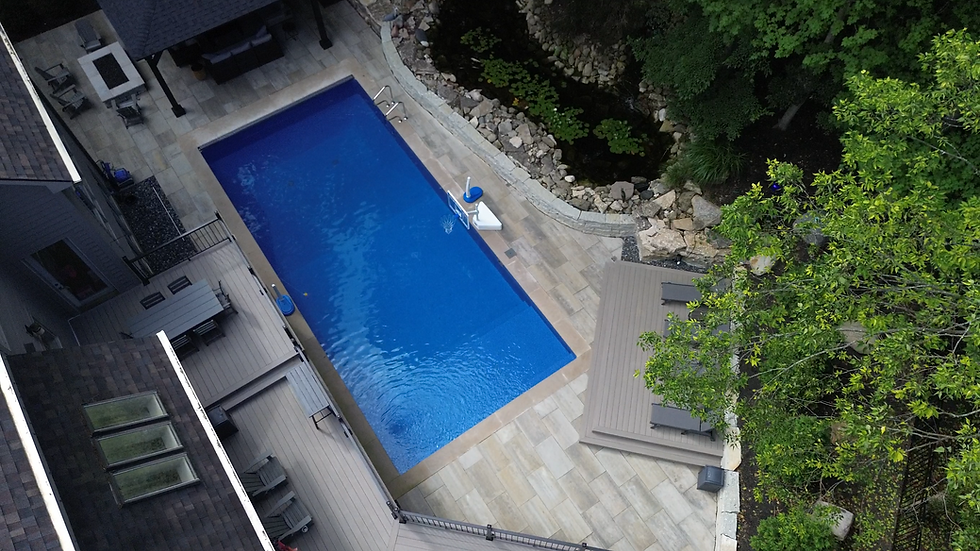
A pool project asks:
Where should the pool go?
A complete backyard design asks:
How should this entire property work?
That second question can lead to a much more cohesive result.
The pool becomes one destination within an outdoor environment that may also include cooking, dining, lounging, fire, shade, landscaping and entertaining.
Instead of creating a backyard centered exclusively around swimming, you're creating an outdoor space designed around how you live.
Create More Than a Pool
The cost of pool landscaping in Columbus ultimately depends on the environment you're trying to create.
For some homeowners, that means improving the patio and landscaping immediately surrounding an existing pool.
For others, it means transforming the entire backyard into a complete outdoor living environment.
At Ciminello's, our pool projects can bring together patios, seating areas, plantings, lighting, retaining walls, outdoor kitchens, fire features and structures as part of one cohesive landscape design.
Our design-build approach also allows the surrounding environment to be considered before construction begins—from grading and drainage to materials, circulation and long-term use.
Because a great pool project shouldn't end at the water's edge.
The entire backyard should feel like it belongs together.


Comments